
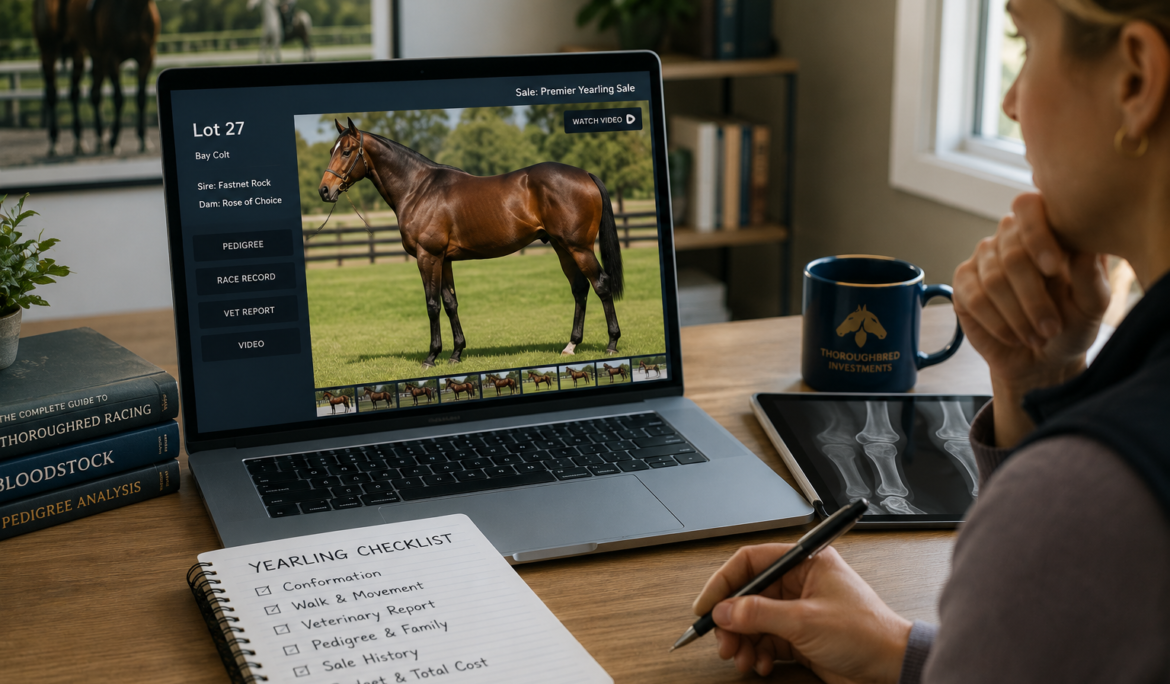
Buying a thoroughbred yearling is exciting because you are not just buying a horse. You are buying potential.
For serious owners, that potential is the appeal. A yearling may develop into a racing prospect worth following, investing in and building a story around. But the same upside also brings uncertainty.
The aim is not to remove every unknown before making contact. It is to make sure the listing gives you enough information to decide whether an enquiry is worth making.
A good yearling listing should help you assess the horse, the seller and the ownership pathway before you take the next step.
What Should a Yearling Listing Tell You?
A useful listing should do more than confirm that a horse is available.
Before enquiring, you should be able to identify:
- the horse’s pedigree
- sex
- location or region
- price presentation
- ownership or sale category
- seller context
- route to full details or contact
The Thoroughbred Sales yearling listings give buyers a structured way to compare prospects, with visible details such as region, sex, category and price presentation. That is a stronger starting point than a loose social media post or an unstructured stable notice.
Browse current yearling listings to compare available prospects before making contact.
Start With Pedigree, But Do Not Stop There
Pedigree is usually one of the first things buyers check, and rightly so.
A yearling’s sire and dam pairing gives you an early sense of bloodline, commercial appeal and potential racing profile. It also helps you compare several listings quickly.
But pedigree is only a starting point.
A strong pedigree does not automatically mean the horse suits your budget, goals or preferred ownership structure. Serious buyers use pedigree to decide whether to look closer, not to make the decision on its own.
The importance of looking beyond bloodlines is reflected in Australian yearling research. An AgriFutures Australia-funded study analysed more than 8,600 radiographic reports from thoroughbred yearlings offered for sale to investigate how identified findings related to later racing performance. For serious buyers, this reinforces the value of requesting available veterinary information and having it interpreted by a suitably qualified professional before making a purchase decision.
Match the Yearling to Your Ownership Goals
Before you assess the horse, be clear about your own intent.
Ask yourself:
- Do I want a future racing prospect?
- Am I comfortable waiting before the horse is race-ready?
- Do I want full ownership or a share?
- What level of cost exposure am I prepared for?
- Do I want to be involved early in the horse’s development?
A thoroughbred yearling can suit buyers who want to be part of the journey from an early stage. It may not suit someone who wants a horse closer to racing.
That distinction matters. A good opportunity is only good if it fits the buyer.
Check Seller Fit Before You Enquire
You are not only assessing the horse. You are also assessing the person or business behind the listing.
The seller relationship can affect communication, expectations, ownership structure and the overall experience. A yearling may look appealing on paper but still be the wrong fit if the trainer, syndicator or seller arrangement does not suit you.
Your first enquiry should therefore cover more than the horse itself. It should help you understand how the opportunity is managed and whether the seller’s approach matches what you want as an owner.
Questions to Ask Before Buying a Yearling Online
Once a listing passes your first filter, prepare specific questions before making contact.
Useful questions include:
- What is the horse’s full pedigree?
- What is known about its physical development?
- What ownership structure is available?
- What costs should I expect beyond the purchase price?
- Who will manage or train the horse?
- What is the expected timeline before racing?
- Is the horse eligible for the Thoroughbred Sales Race Series?
- What information is available for serious buyers?
Good questions protect your time and help the seller give you a more useful answer.
Consider Race Series Eligibility
Race Series eligibility should not be the main reason to buy a yearling, but it can add a useful commercial lens.
The Thoroughbred Sales Race Series gives eligible horses the chance to compete for bonuses, subject to the relevant terms and conditions. For buyers, this is worth understanding before enquiring, especially if the yearling may form part of a longer racing plan.
Eligibility does not replace pedigree, seller fit or ownership suitability. It simply gives you another factor to weigh when comparing prospects.
Check the Race Series details before you enquire about an eligible yearling.
Common Mistakes Buyers Make
Many buyers make the same avoidable mistakes when looking at yearlings online.
The biggest are:
- focusing only on pedigree
- enquiring before knowing what they want
- ignoring ownership structure
- failing to ask about costs
- treating an enquiry like a commitment
- overlooking seller fit
- comparing listings without a clear decision framework
The better approach is simple: clarify your goal, compare suitable listings, then enquire with focused questions.
FAQs About Buying a Yearling Online
What is a thoroughbred yearling?
A thoroughbred yearling is a young horse between one and two years old. Buyers often consider yearlings because they offer the chance to get involved before the horse begins its racing career.
Is buying a yearling risky?
Buying any racehorse involves risk, and yearlings come with extra uncertainty because they are still developing. Careful listing checks, seller questions and ownership planning can help reduce avoidable risk.
What should I look for in a yearling listing?
Look for pedigree, sex, region, price presentation, seller information, ownership structure and a clear way to request more details.
Should first-time owners buy a yearling?
A yearling can suit a first-time owner who understands the longer timeline and costs involved. Buyers who want a horse closer to racing may prefer a tried horse, lease option or syndicate share.
What questions should I ask before enquiring?
Ask about pedigree, physical development, costs, ownership structure, expected racing timeline, trainer or syndicator involvement and any Race Series eligibility.
When Should You Enquire?
An enquiry is not a commitment. It is the next step when a listing has earned closer attention.
You should enquire when the listing gives you enough information to make the conversation useful. That means you have already checked the horse’s basic profile, considered whether the opportunity fits your ownership goals, and identified what you still need to clarify.
Compare first. Shortlist second. Enquire third.
Take the Next Step to Buy a Yearling Online
Buying a yearling online always involves some uncertainty. The key is to avoid unnecessary uncertainty caused by vague listings, poor fit or rushed enquiries.
Start with pedigree, but look beyond it. Check whether the yearling suits your ownership goals, whether the seller context feels right, and whether Race Series eligibility adds value to the opportunity.
Ready to take the next step? Browse current yearling listings, compare the prospects that match your goals, then contact Thoroughbred Sales with focused questions about the opportunities that stand out.