
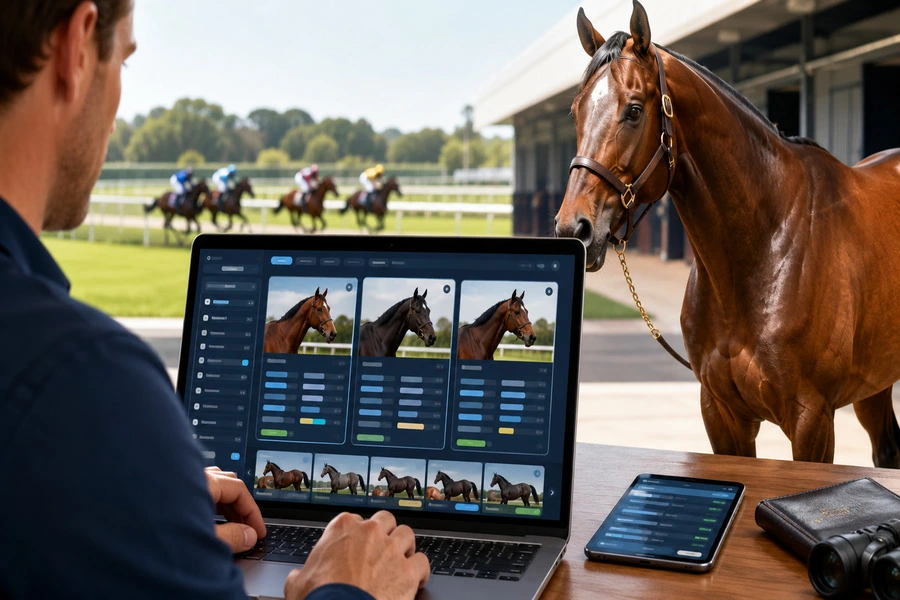
Buying a racehorse online should make it easier to find suitable opportunities. Yet many buyers spend weeks opening unsuitable listings, comparing horses without a clear process and building shortlists that never become easier to assess.
The answer is not to look at more horses. It is to filter more carefully, compare every option against the same criteria and contact sellers only when a listing genuinely matches your needs.
Thoroughbred Sales helps buyers narrow their search by ownership type, horse category, trainer, location, price and other relevant details. Here is how to use that information to build a stronger shortlist and make a more focused enquiry.
Build a Shortlist Before Comparing Individual Horses
The Australian market does not lack horses for sale. The harder task is identifying which opportunities deserve your time.
When every listing receives the same amount of attention, unsuitable options remain under consideration for too long. A better approach removes poor matches early and reserves detailed research for horses that fit your budget, preferred location and ownership goals.
Start by deciding:
- What type of ownership you want
- How much you are prepared to spend
- Which locations are practical
- What stage of development suits you
- How involved you want to be
- Which costs and risks you are comfortable taking on
Once those points are clear, you can assess listings against a consistent standard instead of browsing without direction.
Compare Racehorse Ownership Options
Before comparing individual horses, decide which ownership structure suits your budget, preferred level of involvement and appetite for ongoing costs.
Ownership option | May suit buyers who want | Main advantage | Important questions |
| Whole-horse ownership | Greater control over training, placement and future decisions | Full ownership and greater decision-making authority | What are the purchase price, training fees, veterinary costs, insurance and transport expenses? |
| Racehorse shares or syndicates | A lower financial entry point and shared ownership experience | Purchase and ongoing costs are divided between owners | What percentage is available, what fees apply and who makes management decisions? |
| Lease | Racing involvement without purchasing the horse outright | A different route into racing with potentially lower upfront costs | How long is the lease, who pays ongoing expenses and how are prize money and decisions handled? |
The right option depends on more than the advertised entry price. Consider the total financial commitment, how decisions will be made and how involved you want to be.
Once you have chosen an ownership structure, browse the relevant category instead of comparing opportunities that operate under completely different terms.
Buying a whole racehorse
Buying a whole horse may suit owners who want greater control over training, placement and future plans.
It also means taking responsibility for a larger share of the purchase price and ongoing costs. Before proceeding, clarify the likely expenses beyond the advertised price. These may include training, veterinary care, transport, insurance, nominations and other ownership costs.
Buying racehorse shares
Racehorse shares and syndicates can offer a more accessible route into ownership. The purchase price and ongoing expenses are divided among several owners, although the level of control and involvement may also differ.
As one Australian example, registered racing syndicates in South Australia can include up to 20 owners, with expenses and winnings shared between the group. This shows why buyers should confirm their ownership percentage, cost obligations and decision-making rights before joining a syndicate.
When comparing shares, look beyond the initial cost. Ask:
- What percentage is available?
- What ongoing fees apply?
- Who manages the syndicate?
- How are major decisions made?
- How often do owners receive updates?
- What happens if an owner wants to sell their share?
Leasing a racehorse
A lease may provide another route into racing without purchasing the horse outright.
Lease terms can vary significantly. Check the length of the agreement, cost responsibilities, management arrangements and any conditions relating to prize money, insurance or a future sale.
Start With the Most Relevant Horse Category
Use categories to remove unsuitable listings before you begin detailed comparisons.
Depending on your goals, you may wish to browse:
- Ready-to-run two- and three-year-olds
- Tried horses
- Unraced horses
- Yearlings
- Racehorse shares and syndicates
- Leases
- Multi-horse bundles
Each category represents a different buying decision.
A yearling may involve a longer path before racing. A tried horse has an existing performance record to assess. An unraced horse may offer potential but less evidence. A ready-to-run prospect may suit buyers looking for a shorter route towards competition.
Choose the category that matches your intended timeline, budget and tolerance for uncertainty before comparing individual horses.
Use Filters to Remove Unsuitable Listings Early
Start with the factors most likely to rule a horse out.
Choose the relevant category first, then narrow the results by location, trainer and price range. You can refine the shortlist further by sex, sire or dam when those details form part of your buying criteria.
This order prevents you from spending time on horses that do not suit your budget, preferred location or ownership plan.
For example, there is little value in becoming interested in a horse before discovering that:
- The price is outside your budget
- The horse is based in an impractical location
- The ownership structure does not suit you
- The horse is at the wrong stage of development
- The trainer or syndicator does not match your preferences
- The expected ongoing costs are unsuitable
Good filtering is not about finding every possible horse. It is about removing unsuitable options before they absorb your time.
Look for Information That Supports a Decision
A useful listing should give you enough information to decide whether the horse deserves further investigation.
Start with the main comparison details:
- Horse category and type
- Price or indicative price range
- Location
- Trainer or syndicator
- Pedigree
- Racing or performance history
- Ownership percentage, where relevant
- Available images or supporting information
Use the same questions for every listing:
- Does this opportunity match the type of ownership I want?
- Is the likely cost realistic for my budget?
- Is the location practical?
- Does the horse’s stage of development suit my timeline?
- Is there enough information to justify contacting the seller?
- What details still need to be confirmed?
A listing does not need to answer every due-diligence question. It should, however, make it easier to decide whether a serious conversation is worthwhile.
When the basic fit remains unclear, remove the horse from your shortlist rather than trying to fill in every gap yourself.
Use a Simple Shortlist Scorecard
Score each listing from 0 to 2 against the five criteria below.
Criterion | 0 points | 1 point | 2 points |
| Budget fit | Clearly outside budget | Cost needs clarification | Fits the expected budget |
| Location | Impractical | Possible with additional planning | Practical and suitable |
| Ownership fit | Wrong ownership structure | Some uncertainty | Matches your preferred structure |
| Listing information | Important details are missing | Enough information to investigate | Clear and useful information |
| Next-step clarity | Too many unanswered questions | Several points need clarification | Specific questions can be asked |
Score guide
- 8–10 points: Strong shortlist candidate
- 5–7 points: Investigate further before enquiring
- 0–4 points: Remove unless important information is missing
The score is not a substitute for professional advice or due diligence. It is a quick way to stop attractive but unsuitable listings from remaining on your shortlist.
Compare Every Shortlisted Horse Against the Same Criteria
Once you have reduced the field, compare each remaining horse in the same order.
A simple comparison note may include:
- Why the horse made the shortlist
- The advertised or expected price
- Location
- Ownership structure
- Trainer or syndicator
- Horse category
- Key pedigree or performance information
- Questions that still need answering
- Any issue that would prevent you from proceeding
This does not need to become a complicated spreadsheet. A short, consistent record is usually enough to prevent attractive but unsuitable listings from remaining under consideration.
Keep the shortlist small. A horse should remain on it only when you can explain clearly why the opportunity suits you.
Separate Serious Options From Curiosity Clicks
Most buyers open some listings simply because something looks interesting. That is normal.
The problem begins when those listings remain on the shortlist despite failing the buyer’s original criteria.
Before keeping a horse under consideration, ask:
- Would I realistically pay the expected price?
- Does the ownership arrangement suit me?
- Is the location workable?
- Does the horse fit my preferred timeline?
- Am I interested because the horse fits my plan, or only because the listing caught my attention?
- Can I explain why this horse deserves further investigation?
A smaller shortlist of credible options is more useful than a long list of possibilities.
Know What to Check Before Contacting the Seller
An online listing helps you decide whether to make an enquiry. It does not replace proper due diligence.
Before moving towards a purchase, lease or share agreement, consider which details require confirmation or independent advice.
Depending on the opportunity, you may need to ask about:
- Current ownership and sale terms
- Training and management arrangements
- Ongoing fees and expected costs
- Veterinary history
- Racing history or trial results
- Insurance
- Transport
- Syndicate or lease conditions
- Available ownership percentages
- The process for completing the transaction
Buyers may also wish to obtain independent veterinary, bloodstock, legal or financial advice where appropriate.
The aim is not to turn the first enquiry into a complete investigation. It is to identify the most important unanswered questions and establish whether the opportunity is worth progressing.
Make a Focused Enquiry when Buying a racehorse online
A useful enquiry shows that you have read the listing and understand what still needs clarification.
Avoid asking for information that is already clearly displayed. Instead, focus on the details that could affect your decision.
For example:
- What ongoing costs should I expect?
- Is the advertised percentage still available?
- Are recent veterinary records available?
- What is the next step for arranging an inspection or discussion?
- Are there any conditions attached to the sale, lease or syndicate?
- Is there a comparable opportunity if this horse does not suit my requirements?
A focused enquiry saves time for both buyer and seller. It also makes it easier to move from general interest to a meaningful conversation.
When Is a Listing Ready for a Serious Conversation?
A listing is usually ready for enquiry when three conditions are met.
First, it matches the ownership path you want, whether that is a whole horse, racehorse share, syndicate or lease.
Second, the main practical details appear realistic, including price, location and horse category.
Third, the remaining questions are specific enough to resolve through a conversation with the seller.
When those conditions are met, use the contact option within the listing to ask your questions and confirm the next step.
Racehorse Buying Process at a Glance
Choose ownership type → Select a horse category → Apply filters → Build a shortlist → Verify key details → Contact the seller
Following the same process for every listing makes decisions easier and reduces time spent on poor-fit opportunities.
Buying a racehorse online With a Process, Not a Guess
Most wasted time occurs before an enquiry is sent. It is lost through loose filtering, inconsistent comparisons and shortlists that contain too many unsuitable horses.
A clearer process helps you reach stronger opportunities sooner:
- Choose the right ownership structure.
- Select the most relevant horse category.
- Filter by price, location and trainer.
- Compare each shortlisted horse against the same criteria.
- Remove curiosity clicks.
- Identify the details that still require confirmation.
- Contact the seller with focused questions.
Ready to begin your search? Browse racehorses for sale and use the available categories and filters to build a shortlist that matches your budget, preferred location and ownership goals.
For help with the next step, contact Thoroughbred Sales with a clear description of the type of opportunity you are looking for.
Frequently Asked Questions
What should I filter first when buying a racehorse online?
Start with the ownership structure and horse category. Then narrow the results by location, trainer and price. Use criteria such as sire, dam and sex when they are relevant to your buying strategy.
What is the difference between buying a racehorse and buying a share?
Buying the whole horse generally provides greater control but involves a larger financial commitment. A racehorse share divides ownership and costs among several people, although management decisions may sit with the syndicator or manager.
What costs should I ask about before enquiring?
Ask about training, veterinary care, transport, insurance, nominations, syndicate management fees and any other ongoing charges. The advertised purchase price may represent only part of the total cost of ownership.
When should I contact the seller?
Contact the seller when the listing matches your ownership goals, the likely cost and location are realistic, and your remaining questions are specific enough to resolve through a conversation.