
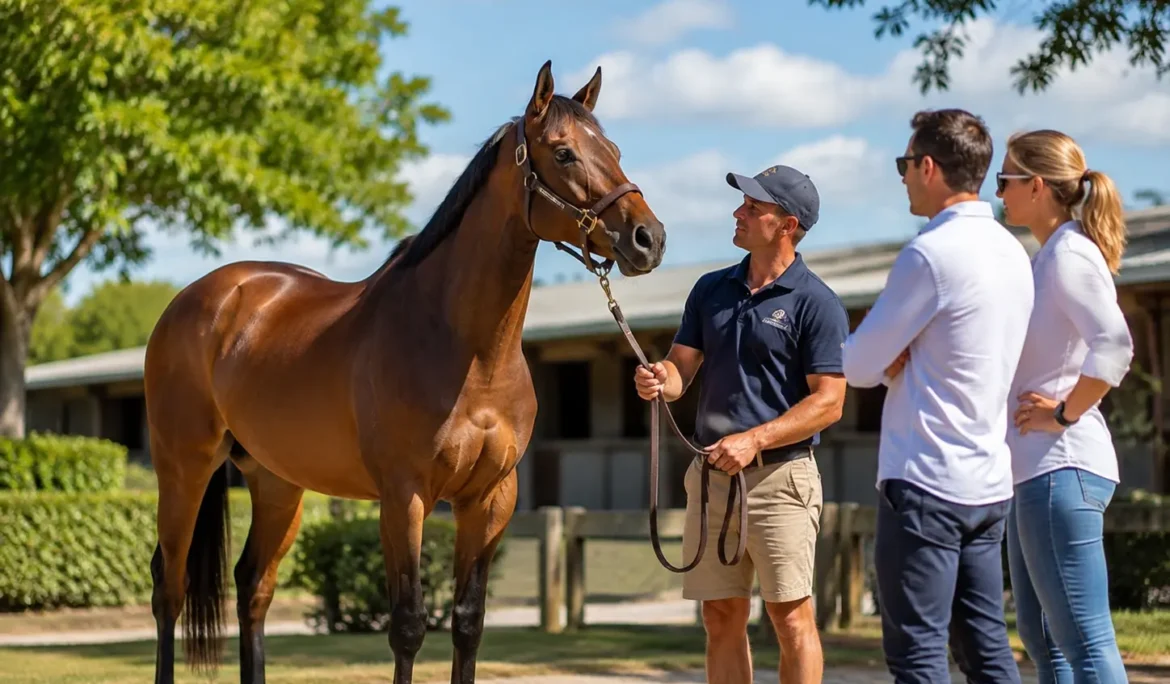
Finding racehorses for sale in Queensland can be exciting, but comparing horses, trainers, ownership percentages and prices can quickly become complicated.
The asking price is only one part of the decision. Buyers should also consider how much of the horse they are purchasing, the ongoing costs involved, the information supplied by the seller and whether the opportunity suits the type of ownership experience they want.
Thoroughbred Sales brings Queensland listings together so buyers can browse available racehorses and ownership opportunities more efficiently. The wider marketplace also includes categories such as syndicates, racehorse shares, tried horses, unraced horses, yearlings, leases and ready-to-run horses.
Before comparing individual horses, decide what you want to own, what you can afford upfront and what ongoing costs you are comfortable carrying.
Start With Queensland Racehorses That Fit How You Want to Own
The right horse depends partly on the ownership experience you want.
Some buyers want to purchase a horse outright and accept the greater financial responsibility that can come with full ownership. Others prefer a smaller share that offers involvement at a lower initial cost.
Neither option is automatically better. They suit different budgets, expectations and levels of responsibility.
Clarifying your preference early helps remove unsuitable listings from your search.
Decide Between Full Ownership and Horse Shares in Queensland
Full ownership can give you greater involvement in decisions, subject to arrangements with the trainer and other service providers. It also means carrying the financial exposure attached to the whole horse.
Horse shares in Queensland divide ownership between several participants. The initial payment may be lower because you are buying a percentage rather than the entire horse. Your share of future expenses will depend on the ownership agreement, so the exact terms should always be confirmed with the seller or syndicator.
Before you shortlist horses, ask yourself:
- Do I want full ownership or a fractional share?
- How much can I spend initially?
- What ongoing amount can I manage comfortably?
- Am I looking for an unraced prospect, a horse closer to racing or a tried horse?
- Do I have a preferred trainer, region or ownership arrangement?
These answers give you a useful buying brief and make it easier to dismiss opportunities that do not fit.
Set a Working Budget Before Comparing QLD Racehorses for Sale
Your budget should cover more than the advertised purchase amount.
Racehorse ownership can involve training fees, veterinary treatment, transport, insurance, nominations, farrier services and other horse-specific expenses. The exact charges vary, so they should be confirmed with the seller or syndicator.
It helps to separate your budget into two figures:
- The amount you can commit to entering the ownership.
- The amount you can comfortably manage as ongoing expenditure.
This prevents an affordable purchase price from leading to an uncomfortable financial commitment later.
Compare the Whole Opportunity, Not Just the Asking Price
Price is easy to compare. Overall value requires more context.
One horse may have a higher advertised price because a larger ownership percentage is available. Another may appear cheaper because the listing represents only a small share.
The horse’s stage of preparation, ownership terms, supporting information and ongoing expenses can also affect the value of the opportunity.
Instead of asking only which option costs less, ask:
What am I buying, what ongoing responsibilities come with it and does the opportunity suit my goals?
What a Queensland Racehorse Listing Should Help You Assess
A useful listing should give you enough information to decide whether an enquiry is worthwhile.
Depending on the listing, useful details may include:
- age
- sex
- pedigree
- location
- trainer or syndicator
- advertised price
- ownership percentage or structure
- photos or video
- racing or trial information
- other supporting details supplied by the seller
The listing does not need to answer every possible question. Its role is to help you decide whether the horse deserves closer investigation.
A good listing should leave you with focused questions rather than basic uncertainty.
The Lowest Entry Price Can Hide a More Expensive Commitment
A low advertised price can attract attention, but it needs to be considered alongside the ownership structure and ongoing costs.
For example, a small share may have a lower entry price than a larger share in another horse. Comparing the two headline prices without considering the percentage being purchased can create a misleading picture.
The same applies to ongoing expenses. Two opportunities with similar purchase prices may have different fees, inclusions or payment arrangements.
Calculate the Cost Attached to Your Ownership Percentage
Start with the percentage being sold.
A 5% share should not be compared directly with a 10% share without accounting for the difference in ownership.
Where enough information is available, consider:
| What to compare | Why it matters | What to confirm |
| Ownership percentage | Shows how much of the horse you are actually buying | Exact percentage offered |
| Entry price | Indicates your initial financial commitment | What the advertised amount covers |
| Ongoing costs | Can materially affect affordability | Training, veterinary, transport and other charges |
| Horse status | Helps place the price in context | Unraced, tried, ready to run or another stage |
| Included information | Helps you assess the opportunity | Pedigree, racing history, photos, video or other supporting material |
You are trying to understand three financial figures:
- your initial purchase amount
- your likely recurring contribution
- any additional or irregular charges that may arise
Those figures create a stronger basis for comparison than headline price alone.
Ask What Is Included Before You Commit
Do not assume every advertised price includes the same things.
Ask the seller what the price covers and when further payments may be required.
Useful points to clarify include:
- the exact ownership percentage
- training fees and billing frequency
- insurance arrangements
- veterinary and farrier expenses
- transport costs
- race nomination or acceptance fees
- syndicate or management charges
- any balance still payable
- how a future sale or transfer of the ownership interest would work
The exact arrangements can differ, so clear answers matter before you compare one opportunity with another.
Build a Shortlist Before You Contact Every Seller
Contacting every appealing seller can quickly create more information than you need.
A shortlist keeps the process manageable and helps you compare opportunities using the same criteria.
Choose a small number of horses that fit your preferred ownership structure, budget, location and stage of development. Then review each one against the same buying brief.
Use Location, Category and Price Together
A Queensland location filter can be a useful starting point for buyers who prefer local access, inspections or racing involvement.
Queensland also has a substantial thoroughbred racing industry. Queensland Government figures show that thoroughbred racing contributed $1.93 billion to the State’s economy in 2024–25. That scale provides useful context for buyers starting their search locally, although the strength of the wider industry does not determine whether an individual horse or ownership opportunity is right for them.
Location alone may still return a broad mix of opportunities, so combine it with the type of horse or ownership structure you want.
For example:
- Buyers looking for a horse with racing or trial history may consider tried horses.
- Buyers comfortable with a longer development period may consider yearlings or unraced horses.
- Buyers seeking a smaller ownership percentage may prefer syndicates or racehorse shares.
Price can then help narrow the shortlist further, provided you continue to consider the wider ownership commitment rather than the advertised amount alone.
A Strong Enquiry Reveals More Than a Listing Alone
An enquiry is a fact-finding step. It does not commit you to buying.
Once a horse reaches your shortlist, contact the seller with specific questions about anything the listing does not make clear.
Thoroughbred Sales states that buyers can contact the seller through the enquiry form provided on the relevant horse listing.
Questions to Ask About the Horse, Costs and Ownership Arrangement
Useful questions include:
- What percentage is available?
- What does the advertised price include?
- What ongoing costs should I expect?
- What is the horse’s current stage of preparation?
- Is additional veterinary, trial or performance information available?
- How are ownership updates communicated?
- Who makes decisions about the horse’s racing programme?
- Are there deadlines or conditions attached to the opportunity?
- What happens if I later want to sell my interest?
The answers should help you assess both the horse and the ownership arrangement surrounding it.
Racehorse ownership involves people as well as pedigree. Communication, expectations and financial clarity can shape the experience after the initial purchase.
Compare Seller Responses Using the Same Criteria
An appealing photo, pedigree or story can influence a buyer’s judgement.
Using the same comparison criteria for every seller helps bring the decision back to evidence.
Record the answers under consistent headings such as:
- ownership percentage
- purchase price
- recurring costs
- current status
- information supplied
- communication process
- unresolved questions
This makes it easier to see which opportunities fit your brief and which need further clarification.
A vague response does not automatically mean the horse is unsuitable, but unresolved uncertainty should be addressed before you proceed.
Queensland Offers More Than One Type of Racing Opportunity
Searches for QLD racehorses for sale can lead to different types of horses and ownership arrangements.
Understanding the differences helps prevent comparisons between opportunities designed for very different buyers.
Compare Tried Horses, Unraced Horses and Racehorse Shares
A tried horse has racing or trial-related history that may give buyers more performance information to assess. Past performance does not guarantee future results, but it can provide more evidence than an unraced horse can offer.
An unraced horse presents a different decision. Without an established race record, buyers may place more emphasis on pedigree, development, seller information and any professional assessments available to them.
A racehorse share refers to ownership structure rather than racing stage. Shares may be offered in unraced, ready-to-run or tried horses.
Always assess both the horse itself and the ownership percentage being offered.
Find a Queensland Opportunity That Fits Your Budget and Expectations
A useful shortlist should contain horses that fit the way you want to own, what you can reasonably spend and the racing experience you are seeking.
Before opening more listings, write down four details:
- your preferred ownership percentage
- your purchase budget
- your manageable ongoing budget
- your preferred horse category
Use those criteria to rule out unsuitable opportunities early.
You do not need to identify the perfect horse from a listing page. You need to identify which horses justify a proper conversation with the seller.
Browse Queensland Listings With a Clear Buying Brief
Use your buying brief to browse Queensland racehorses and compare opportunities against the same criteria.
When a horse fits your shortlist, review the available information before contacting the seller.
This gives you a clearer starting point for the enquiry and helps you focus on the details that genuinely affect your decision.
Contact Us When You Need Help Narrowing the Search
Thoroughbred Sales provides a marketplace where buyers can discover available horses and connect with the sellers behind those listings.
Transaction details, horse information and ownership terms should be discussed with the relevant seller.
Browse Queensland listings at /region/queensland/ or explore the wider marketplace at /horses-for-sale/.
For help using the platform or finding the appropriate area of the site, visit /contact/.
The Questions That Can Save You From the Wrong Purchase
How much does it cost to buy a racehorse in Queensland?
There is no single purchase price because listings can involve whole horses, syndicate positions or fractional shares.
Age, pedigree, racing status, ownership percentage and seller terms can all affect the advertised amount.
Compare the full ownership arrangement and expected ongoing expenses before deciding whether an opportunity fits your budget.
Are horse shares in Queensland cheaper than buying a horse outright?
A share will usually require a lower initial payment than buying the whole horse because you are acquiring only a percentage.
You may still be responsible for a proportional share of ongoing expenses.
Confirm the ownership percentage, inclusions and recurring payment structure with the seller.
What ongoing costs should I ask about before buying?
Ask about training, veterinary treatment, farrier work, transport, insurance, nominations and any syndicate or management charges.
You should also ask about billing frequency and any expenses that fall outside normal recurring fees.
The exact costs need to come from the seller because each arrangement can differ.
How can I tell whether a Queensland racehorse is fairly priced?
Compare the ownership percentage, horse profile, supporting information, current stage of preparation and financial terms.
A useful comparison uses broadly equivalent information across several suitable opportunities rather than relying on headline price alone.
Independent professional advice may also be appropriate where you need an assessment beyond the information supplied by the listing and seller.
Should I choose a tried horse or an unraced thoroughbred?
A tried horse may provide more racing or trial information to review, while an unraced horse involves greater uncertainty about future racing ability.
Your preferred timeline, tolerance for uncertainty and ownership goals should help guide the choice.
Neither option removes the risks associated with racehorse ownership.
What should I do if a listing leaves out information?
Use the listing enquiry form to ask the seller for the missing details.
Be specific about what you need, whether that relates to ownership terms, ongoing costs, racing history, veterinary information or the horse’s current status.
Do not rely on assumptions when the seller can provide a direct answer.
Can Thoroughbred Sales tell me which horse to buy?
Thoroughbred Sales provides a marketplace where buyers can discover racehorses and connect with sellers.
The platform does not replace your own assessment or any independent veterinary, legal or financial advice you may require.
Use the marketplace to build a shortlist, gather information and begin informed discussions with the relevant seller.
Your Shortlist Should Make the Decision Easier
Avoiding an unsuitable purchase is not about finding the cheapest Queensland listing.
It is about knowing what you want, comparing opportunities on similar terms and clarifying the costs and conditions that could affect your ownership experience.
Set your budget. Choose your preferred ownership structure. Review the available horse and seller information. Then ask direct questions before deciding whether to move forward.
Browse Queensland racehorses, explore all available opportunities at /horses-for-sale/, or visit /contact/ for help using the platform.