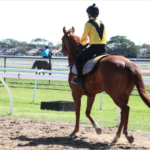
Eagle Farm Racecourse is one of Brisbane’s most historic thoroughbred racing venues, located in Ascot, approximately 10 kilometres from the CBD.
Established in 1865, the racecourse is closely associated with the Brisbane Winter Racing Carnival and major events including the Stradbroke Handicap, Queensland Derby, Queensland Oaks and J.J. Atkins.
Beyond its famous races, Eagle Farm is known for its heritage grandstands, long racing history and connection with Queensland’s thoroughbred industry.
On major race days, the atmosphere builds as horses turn into the home straight. Jockeys ask for one final effort, owners watch every stride and spectators follow the field towards the winning post.
These moments connect today’s racing with generations of competition at Eagle Farm.
At Thoroughbred Sales, our interest in Australian racing extends from the horses advertised through our marketplace to the racecourses where their careers may take them.
Whether you’re planning your first visit, following Brisbane racing or exploring the venue’s history, this guide covers Eagle Farm’s famous races, track characteristics and practical visitor information.
More Than 160 Years of Racing: Why Eagle Farm Matters to Brisbane
Eagle Farm has been part of Queensland thoroughbred racing since the nineteenth century.
Over more than 160 years, it has witnessed changes in racing, training methods and facilities while hosting events that remain important to the state’s sporting calendar.
Its history provides a useful starting point for understanding the venue today.
From the First Race Meetings to Modern Eagle Farm Racecourse
Eagle Farm’s origins date to 1863, when land was granted to the Queensland Turf Club for a permanent racecourse.
The first official race meeting took place on 14 August 1865.
Historical accounts describe a course that had not yet been completely cleared of trees, making some sections of the racing difficult for spectators to see.
Despite those early limitations, Eagle Farm developed into an important centre for organised thoroughbred racing.
As Brisbane grew, the racecourse gained improved grandstands, betting facilities, administrative buildings and other infrastructure.
The Queensland Turf Club conducted its first Queensland Derby at Eagle Farm in 1871. Earlier versions of the race had been held at other Queensland venues.
In 1890, the first Stradbroke Handicap added another major event to Eagle Farm’s racing programme.
Both races remain significant to Queensland racing, although their conditions and scheduling have changed over time.
Today, Eagle Farm is operated by Brisbane Racing Club, which formed in 2009 through the merger of the Queensland Turf Club and Brisbane Turf Club.
The facilities have evolved considerably since the first meeting, while the racecourse retains important features of its historical character.
How Eagle Farm Became Part of Queensland’s Sporting Identity
One of Eagle Farm’s most recognisable characteristics is its heritage architecture.
Historic grandstands, decorative ironwork and established racecourse buildings reflect the venue’s longstanding connection with Brisbane racing.
The grounds have also hosted activities beyond thoroughbred competition, including public gatherings, historical events and royal visits.
For generations of Queenslanders, Eagle Farm has been a place to watch racing, attend sporting events and enjoy social occasions.
Its significance is also connected to the people involved in the sport.
Trainers, jockeys, breeders and owners have brought horses to Eagle Farm throughout its history, contributing to the development of Queensland racing.
Major carnival meetings continue that tradition, attracting established racing followers alongside visitors attending the venue for the first time.
The Races That Put Eagle Farm at the Centre of Queensland’s Winter Carnival
Eagle Farm plays an important role in Brisbane’s winter racing season.
During May and June, leading trainers and thoroughbreds compete at major meetings held across Eagle Farm and neighbouring Doomben.
Some races attract established Group 1 performers, while others provide developing horses with opportunities to compete at the highest level.
Stradbroke Handicap: Queensland’s Famous Group 1 Sprint
The Stradbroke Handicap is one of Eagle Farm’s most recognisable racing events.
First conducted in 1890, it has developed into a prominent Group 1 sprint handicap.
The modern race is run over 1,400 metres and attracts accomplished sprinters and horses suited to the distance.
As a handicap, runners carry assigned weights.
This adds another consideration when assessing the field. A horse with strong recent form may carry more weight than a less established competitor.
Barrier positions, race tempo and the ability to maintain speed through the closing stages can also affect the result.
The Stradbroke has produced several notable multiple winners.
Rough Habit won three consecutive editions from 1991 to 1993, establishing a remarkable record in the race.
Black Piranha followed with successive victories in 2009 and 2010.
More recently, War Machine won in 2025, while Spicy Martini claimed the 2026 Stradbroke Handicap for trainer Toby Edmonds and jockey Taylor Marshall.
These performances contribute to the Stradbroke’s reputation as one of Queensland’s major racing events.
Queensland Derby, Queensland Oaks and J.J. Atkins: The Next Generation of Racing Talent
Brisbane’s winter carnival also features important Group 1 races for developing thoroughbreds.
Queensland Derby
The Queensland Derby is a Group 1 race for three-year-old thoroughbreds, traditionally conducted over 2,400 metres.
It tests stamina, maturity and the ability to maintain a competitive performance over a longer distance.
Some runners reach the Derby after competing successfully over shorter distances. Others are prepared with staying races in mind.
For racing followers, the Derby provides an opportunity to assess how young horses are developing as they gain experience.
Queensland Oaks
The Queensland Oaks is a Group 1 race for three-year-old fillies, generally conducted over 2,200 metres.
Like the Derby, it demands fitness, stamina and maturity.
A filly may have considerable natural ability but still need sufficient racing experience and temperament to settle over the distance and finish strongly.
An Oaks victory can become an important achievement in a filly’s racing record and, where relevant, her future breeding profile.
J.J. Atkins
The J.J. Atkins is a Group 1 race for two-year-old thoroughbreds, conducted over 1,600 metres.
It gives promising young horses an opportunity to compete at the highest level early in their racing careers.
Previous winners include The Autumn Sun, Press Statement and Sizzling.
These horses later achieved further recognition, although a strong performance as a two-year-old cannot guarantee future racing success.
The Derby, Oaks and J.J. Atkins highlight different stages of a thoroughbred’s development, from early racing ability to the stamina required over longer distances.
What Does It Take for a Thoroughbred to Perform at Eagle Farm?
A strong racing record provides useful information, but it does not guarantee that a horse will reproduce its best performance at Eagle Farm.
Track conditions, race distance, barrier position and tempo can affect how a contest unfolds.
Understanding these factors helps racing followers assess results beyond finishing positions alone.
Eagle Farm Track Layout, Racing Distances and Turf Conditions
Eagle Farm’s main racing surface is turf.
Published racecourse specifications list a circumference of approximately 2,027 metres and a home straight measuring 434 metres.
The layout provides a substantial straight for horses to finish their races, although each runner’s position before turning for home remains important.
A horse travelling wide may cover additional ground and use more energy.
Another may secure an economical position but struggle to find a clear passage when the field enters the straight.
Race distance also changes the challenge.
Shorter sprints often place greater emphasis on early speed and positioning.
The 1,400-metre Stradbroke requires speed that can be sustained over a longer sprint distance.
Races such as the Queensland Derby demand more stamina and the ability to settle over an extended journey.
When assessing Eagle Farm performances, consider the distance and conditions alongside each horse’s finishing position.
A horse that performs strongly over 1,200 metres will not necessarily be equally effective over 2,400 metres.
How Barriers, Track Conditions and Race Tempo Influence Results
Queensland weather can affect the condition of Eagle Farm’s turf surface.
Some horses have demonstrated consistent performances on firmer ground, while others may be better suited to softer conditions.
Previous racing results may help identify these preferences, although they cannot guarantee future performances.
Barrier draws can also influence a race.
An inside position may help a horse secure an economical run, but the advantage depends on the starting point, field size and expected running pattern.
Race tempo introduces another variable.
A strongly run contest can place additional demands on horses racing near the lead.
A slower pace may make it more difficult for runners settling towards the rear to make up ground when the leaders accelerate.
A horse may have performed well despite an unfavourable passage, while another may have benefited from an economical run.
For further venue and track information, explore our Eagle Farm Racecourse guide.
The Horses, Trainers and Racing Stories That Give Eagle Farm Its Character
Eagle Farm’s racing history includes memorable performances by thoroughbreds whose achievements remain associated with major Queensland events.
The Stradbroke Handicap provides some of the strongest examples, with winners who returned to succeed in the race more than once.
Memorable Stradbroke Handicap Winners and Queensland Racing Achievements
Rough Habit remains one of the most recognisable horses associated with the Stradbroke Handicap.
The New Zealand-bred gelding became a favourite among Australian racing followers during the early 1990s.
His three consecutive Stradbroke victories from 1991 to 1993 established a remarkable achievement in one of Queensland’s leading handicaps.
Black Piranha later joined the race’s distinguished list of multiple winners, taking successive editions in 2009 and 2010.
River Lad’s victory in 2014 was another notable result, bringing recognition to Queensland trainer Natalie McCall and the horse’s connections.
The race continues to produce significant moments.
Spicy Martini’s 2026 victory gave jockey Taylor Marshall his first Group 1 win and added another achievement to trainer Toby Edmonds’ record.
Eagle Farm’s wider racing history also includes appearances by champions such as Tulloch, Gunsynd, Strawberry Road and Kingston Town.
Their careers span different periods of Australian thoroughbred racing, reflecting the quality of competition associated with the venue.
The People Behind a Thoroughbred’s Journey to Eagle Farm
Every horse competing at Eagle Farm is supported by people responsible for its breeding, development, training and care.
Breeders make decisions about bloodlines and breeding programmes.
Trainers manage preparation, fitness and the selection of suitable races.
Stable staff provide daily care, including feeding, grooming, exercise and monitoring the horse’s condition.
Veterinarians, farriers and transport providers contribute specialist services throughout its career.
Owners provide financial support, whether they purchase an entire thoroughbred or participate through shared ownership.
These responsibilities become particularly visible at major carnival meetings.
Months of preparation may lead to a single performance at Eagle Farm, although the work involved continues regardless of the result.
For a horse’s connections, competing at the venue can be an important milestone, whether it wins or gains further experience.
Planning a Day at Eagle Farm? Here’s What to Know Before You Arrive
Eagle Farm gives visitors an opportunity to enjoy thoroughbred racing at a venue with significant historical character.
Its heritage grandstands, hospitality areas and race-day facilities provide different ways to experience a meeting.
Arrangements can vary between regular racing days and major carnival events, so check the details for your intended meeting before travelling.
Grandstands, Mounting Yard, Hospitality and Race-Day Facilities
Visitors can generally choose between public admission and more specialised hospitality options, depending on the event.
Eagle Farm’s heritage grandstands remain an important part of the venue’s appearance.
The racecourse also offers function and hospitality spaces, including the Guineas Room, Tote Room and Society Rooftop.
For visitors interested in the horses themselves, the mounting yard is worth exploring.
Watching thoroughbreds parade before racing provides an opportunity to observe their appearance, movement and behaviour.
It also allows spectators to see jockeys, trainers and owners during the final stages of preparation.
Ticketing, dress requirements and access to particular facilities depend on the meeting and admission type.
The following table summarises the practical details worth confirming before attending.
| Visitor Information | What to Know Before Attending |
| Location | Eagle Farm Racecourse, 230 Lancaster Road, Ascot, Brisbane |
| Train | Ascot Railway Station is beside the racecourse. Follow the designated pedestrian route to Gate 4. |
| Bus | Brisbane Racing Club lists routes 300 and 301 from the city. Check current Translink services. |
| Tickets | General admission and hospitality options vary by race meeting. |
| Dress code | Requirements depend on the admission area and event. |
| Parking | Infield parking may be available via Nudgee Road. Confirm arrangements for your meeting. |
| Accessibility | Check current Brisbane Racing Club access and parking information for individual requirements. |
| Venue confirmation | Check whether your meeting is at Eagle Farm or nearby Doomben. |
For current race-day arrangements, consult the Brisbane Racing Club website.
Getting to Eagle Farm Racecourse From Brisbane CBD
Eagle Farm is located at 230 Lancaster Road, Ascot, approximately 10 kilometres from central Brisbane.
Visitors can reach the venue by train, bus, car, taxi or rideshare.
Train
Ascot Railway Station is beside Eagle Farm Racecourse on the Doomben line.
Visitors should follow the designated pedestrian route to Gate 4, near the intersection of Racecourse Road and Lancaster Road.
The railway bridge is reserved for horses and is not available for public pedestrian access.
Bus
Brisbane Racing Club lists routes 300 and 301 as options for travelling from the city to Eagle Farm.
Check current timetables and services through Translink before travelling.
Taxi and rideshare
Taxi and rideshare arrangements are available around the racecourse, although collection points and road access may change during major events.
Check the event information for designated locations.
Parking
Public parking may be available in the racecourse infield, with vehicle access from Nudgee Road near Racecourse Village Shopping Centre.
Availability and access conditions depend on the event.
For major carnival meetings, public transport may be a practical alternative to driving.
The Brisbane Racing Club’s official transport guide provides further information about getting to Eagle Farm.
Eagle Farm and Doomben: Two Racecourses at the Heart of Brisbane Racing
Visitors unfamiliar with Brisbane racing sometimes confuse Eagle Farm and Doomben.
The venues are located less than one kilometre apart in Ascot, with Nudgee Road separating them.
Both are operated by Brisbane Racing Club, but each has its own history, track configuration and racing programme.
What Makes Eagle Farm and Doomben Different?
Eagle Farm’s racing history dates to 1865.
Doomben opened in 1933, becoming another important venue for Brisbane thoroughbred racing.
Although the racecourses are close together, their layouts and facilities differ.
Eagle Farm is closely associated with the Stradbroke Handicap, Queensland Derby and other major winter carnival events.
Doomben is particularly well known for races such as the Doomben 10,000 and Doomben Cup.
Important meetings are held across both venues during Brisbane’s winter racing season.
The exact programme can vary, so visitors should confirm which racecourse is hosting the meeting they intend to attend.
This matters because the venues have separate entrances and access arrangements.
Check the venue name on your ticket and follow the directions provided for that meeting.
From Country Racecourses to Eagle Farm: The Bigger Queensland Thoroughbred Story
Eagle Farm attracts attention because of its major races, but Queensland thoroughbred racing extends well beyond Brisbane.
Regional stables, provincial training centres, breeding farms and country racecourses all contribute to the industry.
A horse competing at Eagle Farm may have followed a different racing pathway from others in the same field.
How Queensland Trainers and Thoroughbreds Progress Through the Racing System
Some thoroughbreds begin their careers with metropolitan trainers.
Others are prepared in regional Queensland, competing at country or provincial meetings before progressing to stronger company.
A horse may develop competitive form through lower-grade races before entering metropolitan competition.
Another may remain better suited to regional racing throughout its career.
Horses mature at different rates, respond differently to training and demonstrate different racing strengths.
Some show ability early, while others need additional time to develop or find suitable distances.
Queensland’s breeding industry also contributes to this wider racing system.
Breeding operations produce thoroughbreds that may eventually compete locally, interstate or overseas.
For prospective owners, this provides a useful perspective on the different opportunities available.
Racehorse ownership isn’t limited to horses expected to compete in Group 1 events.
Many people participate because they enjoy following a horse’s development and being involved in Australian thoroughbred racing.
At Thoroughbred Sales, our marketplace features opportunities advertised by trainers, syndicators and other sellers across Australia, including Queensland.
Inspired by Brisbane Racing? Discover the Thoroughbreds Behind the Sport
Attending Eagle Farm may encourage a deeper interest in thoroughbred racing.
You might begin following individual horses, recognising trainers or paying closer attention to breeding and racing form.
For some racing followers, that interest eventually extends to exploring racehorse ownership.
There are several ways to participate, each involving different financial and practical responsibilities.
Exploring Thoroughbred Horses for Sale in Queensland
Prospective buyers can explore opportunities involving yearlings, unraced horses, tried racehorses and syndicate shares.
Each represents a different type of purchase.
Yearlings may appeal to buyers interested in following a horse through early development and preparation.
Tried racehorses provide established racing records that can be assessed alongside current training and veterinary information.
Syndicate shares allow buyers to acquire an agreed ownership interest, with costs and responsibilities governed by the relevant arrangement.
Before enquiring about a horse, compare its age, pedigree, available racing history, asking price and expected ongoing expenses.
It’s also important to understand the ownership terms and the people responsible for managing the horse.
At Thoroughbred Sales, our horses for sale marketplace brings together opportunities advertised across Australia, including Queensland.
Buyers can review available listings and contact advertisers directly.
Horses advertised through our platform aren’t necessarily based or trained at Eagle Farm.
Our role is to connect prospective buyers and sellers rather than guarantee racing results or manage every ownership arrangement.
For visitors whose interest in ownership began with Brisbane racing, the marketplace offers a way to explore advertised opportunities.
Why Eagle Farm Remains an Essential Part of Queensland Racing
Eagle Farm has been part of Brisbane’s thoroughbred racing history since 1865.
From the early Queensland Derby and Stradbroke Handicap to today’s Brisbane Winter Racing Carnival, the venue has hosted generations of horses, trainers, jockeys and racing followers.
Its heritage grandstands, major races and connection with Queensland’s wider thoroughbred industry make it a distinctive venue for racing enthusiasts and first-time visitors.
For further track details and practical information, explore our Eagle Farm Racecourse guide.
If following Brisbane racing has sparked your interest in ownership, you can also browse thoroughbred horses for sale and enquire directly with advertisers through Thoroughbred Sales.
For questions about using our marketplace, you’re welcome to contact Thoroughbred Sales.
Heading to Eagle Farm? Seven Questions Worth Answering Before Race Day
Where is Eagle Farm Racecourse located in Brisbane?
Eagle Farm Racecourse is at 230 Lancaster Road, Ascot, approximately 10 kilometres from Brisbane CBD.
Ascot Railway Station is beside the venue, and visitors can also travel by bus, car, taxi or rideshare.
Confirm the correct entrance and transport arrangements before attending.
What major horse races are held at Eagle Farm?
Eagle Farm is closely associated with the Stradbroke Handicap, Queensland Derby, Queensland Oaks and J.J. Atkins.
These races feature different distances and racing conditions, attracting established thoroughbreds and developing young horses.
Check the current racing calendar for event dates and venue allocations.
When does the Brisbane Winter Racing Carnival take place?
Brisbane’s major winter racing carnival generally takes place across May and June.
Important meetings are held at Eagle Farm and Doomben, including Group 1 races and other feature events.
Exact dates and race allocations are published by the relevant racing organisers each season.
How is Eagle Farm Racecourse different from Doomben?
Eagle Farm and Doomben are separate racecourses in Ascot, less than one kilometre apart.
Eagle Farm opened in 1865, while Doomben opened in 1933.
Both are operated by Brisbane Racing Club, but they have different track layouts, facilities and racing programmes.
Always confirm which venue is hosting your meeting.
Can you get to Eagle Farm by train or bus?
Yes. Ascot Railway Station is beside Eagle Farm on the Doomben line.
Brisbane Racing Club also lists bus routes 300 and 301 as options from the city.
Visitors travelling by train should use the pedestrian route to Gate 4 rather than the horse-only railway bridge.
Check Translink for current services.
What should first-time visitors know about tickets, parking and dress codes?
Admission types, hospitality packages and dress requirements vary depending on the meeting and areas being accessed.
Parking may be available in designated areas, subject to event arrangements.
Check the Brisbane Racing Club’s official information before attending, particularly for major carnival meetings.
Can I find thoroughbred horses for sale in Queensland through Thoroughbred Sales?
Yes. Our marketplace features thoroughbreds and ownership opportunities advertised across Australia, including Queensland.
Buyers can explore available horses for sale, review the information provided and contact relevant sellers.
Individual horses advertised through Thoroughbred Sales aren’t necessarily based or trained at Eagle Farm.