
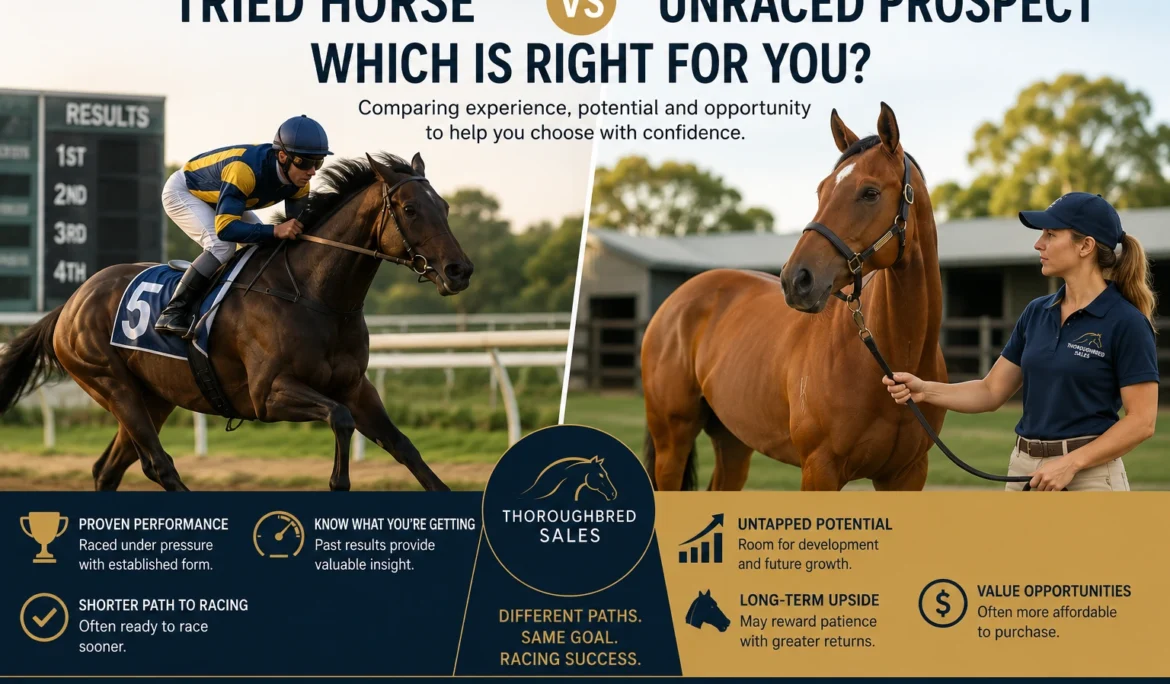
Choosing between a tried horse and an unraced prospect is not simply a matter of deciding which option is better.
The right choice depends on how much evidence you want before buying, how soon you hope to race and how comfortable you are with uncertainty.
A tried horse may give you race form and performance history to assess. An unraced prospect requires more judgement based on factors such as pedigree, development, preparation and professional opinion.
Both paths can suit the right buyer. The important question is which one fits your budget, timeline and ownership goals.
Tried Horse vs Unraced Prospect: Evidence or Potential?
The main difference is the amount and type of information available before you buy.
With a tried horse, you may be able to review:
- previous race results;
- performance at different distances or track conditions;
- racing consistency;
- current class or rating;
- trainer history;
- recent form.
An unraced prospect has no race record to assess. Buyers may need to place greater weight on:
- pedigree;
- conformation and physical development;
- training progress;
- temperament;
- veterinary information;
- advice from trainers, agents or other racing professionals.
This does not mean a tried horse is risk free or that an unraced horse has greater potential. It means the uncertainty appears in different places.
Benefits of Buying a Tried Horse
More performance evidence
The clearest advantage of a tried horse is that you may have more evidence to examine.
Race form can show what the horse has already achieved, how consistently it has performed and whether its profile appears compatible with your ownership goals.
This can make comparisons more grounded. Rather than relying almost entirely on projection, you can assess a body of existing performance information.
However, form does not guarantee future results. Buyers should still investigate the horse’s current condition, recent workload, veterinary history and reason for sale.
A potentially shorter assessment process
A tried horse may suit buyers who want a clearer picture before making a decision.
Because performance records already exist, you may be able to assess suitability more quickly than you could with a horse that has never raced.
A tried horse may also be closer to returning to the track, depending on its condition and training status. This should always be confirmed with the seller, as some horses may require a spell, rehabilitation or further preparation.
More realistic performance expectations
Existing form can help buyers set more realistic expectations.
You may be able to judge whether the horse is likely to suit a particular class, distance, racing jurisdiction or ownership plan. This information can also help you ask more focused questions before arranging an inspection or veterinary assessment.
Benefits of Buying an Unraced Prospect
The opportunity to enter earlier
An unraced prospect allows you to become involved before race performance has established the horse’s profile.
Some buyers find this appealing because they want to follow the horse’s development from an earlier stage. They may also value the opportunity to assess potential before public form influences demand or price.
The trade off is greater uncertainty. Without race results, the horse’s ability, durability and likely level of performance remain less established.
A longer development journey
An unraced horse may suit owners who are prepared to wait.
Depending on its age and preparation, the horse may need more time before it is ready to race. Training progress can also change, and setbacks may extend the expected timeline.
Buyers considering this route should be comfortable with a development process that may not produce immediate answers.
Greater reliance on professional assessment
Buying an unraced prospect often requires more input from experienced professionals.
A trainer, bloodstock agent or veterinarian may help assess the horse’s:
- physical development;
- movement and conformation;
- temperament;
- pedigree;
- preparation;
- suitability for the intended racing programme.
Australia has an established network of specialist equine veterinarians available to support these assessments. Equine Veterinarians Australia represents about 75% of the country’s equine veterinarians and has more than 900 members in Australia and overseas. Its professional resources include guidance and documentation for equine pre-purchase examinations.
A pre-purchase examination may assess the horse’s current health and soundness through clinical checks, gait evaluation and selected diagnostic tests. It cannot predict future performance or remove the inherent uncertainty attached to buying a tried or unraced horse.
Professional advice cannot eliminate risk, but it can help buyers make a more informed decision.
Tried Horse and Unraced Prospect Comparison
| Factor | Tried Horse | Unraced Prospect |
| Performance evidence | Race form and results may be available | No race form is available |
| Main assessment focus | Form, consistency, class, condition and racing history | Pedigree, conformation, preparation and potential |
| Timeline | May be closer to racing, depending on condition | May require a longer development period |
| Type of uncertainty | Interpreting existing performance and future suitability | Assessing ability before race performance exists |
| Often suits | Buyers seeking more evidence before committing | Buyers comfortable with projection and patience |
| Professional checks | Veterinary review, form assessment and current condition checks | Veterinary review, physical assessment and training evaluation |
How Risk Differs Between the Two Options
A tried horse may involve less uncertainty about past performance, but it can still carry significant future risk.
Existing race form does not tell you everything about:
- current soundness;
- recovery from previous racing;
- future improvement or decline;
- suitability for a new trainer;
- changes in distance, class or environment.
An unraced prospect involves uncertainty at an earlier stage. Buyers do not yet know how the horse will perform under race conditions or whether it will fulfil its apparent potential.
This distinction matters because buyers sometimes confuse possibility with suitability.
An open ended profile may sound exciting, but it only suits buyers who are comfortable waiting for more evidence. Conversely, a horse with form may feel more predictable, but its past performance must still be assessed carefully.
Timeline Matters as Much as Risk
Before comparing individual horses, decide how quickly you want to become involved in racing.
A tried horse or ready to run horse may suit you when:
- you want more existing information;
- you prefer a potentially shorter route to racing;
- you want to assess previous performance;
- you are less comfortable buying without race form.
An unraced prospect may suit you when:
- you are prepared for a longer development period;
- you want to enter ownership before the horse has raced;
- you are comfortable making decisions based on projection;
- you have access to professional guidance.
Do not assume every tried horse is ready to race immediately or every unraced horse is months away. Ask the seller about the horse’s current training status and expected timeline.
What to Check Before You Buy
Whether you are considering a tried horse or an unraced prospect, review more than the headline information in the listing.
Questions to ask about a tried horse
Ask about:
- recent training and racing history;
- current condition;
- veterinary history;
- any previous injuries or setbacks;
- reason for sale;
- preferred distance and track conditions;
- current rating or class;
- expected preparation before its next race.
Questions to ask about an unraced prospect
Ask about:
- stage of preparation;
- expected racing timeline;
- trainer feedback;
- temperament;
- veterinary history;
- pedigree;
- physical development;
- any previous setbacks;
- why the horse has not yet raced.
Listing information should be treated as the start of the assessment, not the whole decision. Verify important details directly and seek suitable professional advice before purchasing.
Use Search Filters to Narrow the Right Fit
Start by deciding which category matches your preferred ownership path.
You can then narrow available listings using relevant filters such as:
- category;
- sire and dam;
- trainer;
- sex;
- location;
- price range.
Begin with the biggest decision first. Choose whether you want to compare tried horses, unraced prospects or ready to run options.
Next, refine the results by budget, location and other criteria that matter to you. Open only the listings that match your core requirements closely enough to justify further investigation.
This approach helps you avoid comparing horses that sit at very different stages of development.
Which Type of Horse Suits You?
A tried horse may suit you if you want performance information to guide your decision.
You may be able to review form, consistency, class and previous results before deciding whether the horse fits your goals. You should still ask about its current condition, recent preparation and reason for sale.
An unraced prospect may suit you if you are comfortable assessing potential before race performance is available.
The decision may rely more heavily on pedigree, conformation, preparation, veterinary information and professional opinion. You may also need to allow more time before the horse races.
Consider a tried horse when you value:
- more existing performance evidence;
- a potentially shorter assessment process;
- clearer expectations about previous ability.
Consider an unraced prospect when you value:
- entering ownership earlier;
- following a longer development journey;
- the possibility of assessing potential before race form exists.
Neither option is automatically safer, cheaper or more rewarding. The right fit depends on your circumstances and the individual horse.
Choose the Horse That Fits Your Ownership Goals
The tried versus unraced decision becomes easier when you stop asking which category is best and start asking which one fits the way you want to own.
Choose based on:
- how much evidence you need;
- how long you are prepared to wait;
- how much uncertainty you can accept;
- what professional support you have;
- how the purchase fits your total budget.
Browse the relevant horse categories, apply filters that reflect your priorities and compare only the listings that suit your ownership plan.
When a horse matches your criteria, contact the seller with focused questions and verify its history, condition and suitability before taking the next step.
Frequently Asked Questions
Is a tried horse less risky than an unraced prospect?
A tried horse may provide more information because race form and performance history can be available. However, future performance, soundness and suitability are never guaranteed. The risk is different rather than removed.
When does an unraced horse make sense?
An unraced prospect may suit a buyer who is comfortable with a longer timeline, has access to professional advice and is willing to make a decision before race performance is available.
What should I check first when viewing a tried horse?
Start with the horse’s form, current condition, veterinary history, recent training, class level and reason for sale. Confirm whether it is currently in work and how soon it may be ready to race.
What should I check when viewing an unraced prospect?
Review its pedigree, development, training progress, temperament, veterinary information and expected racing timeline. Ask an experienced trainer, agent or veterinarian to help assess suitability.
Is a ready to run horse the same as a tried horse?
Not necessarily. A ready to run horse may be prepared for racing but may not have an established race record. Check the individual listing and confirm the horse’s current stage with the seller.
When should I contact the seller?
Contact the seller once a listing matches your budget, preferred timeline and ownership goals closely enough to justify further investigation. Prepare specific questions rather than making a general enquiry.