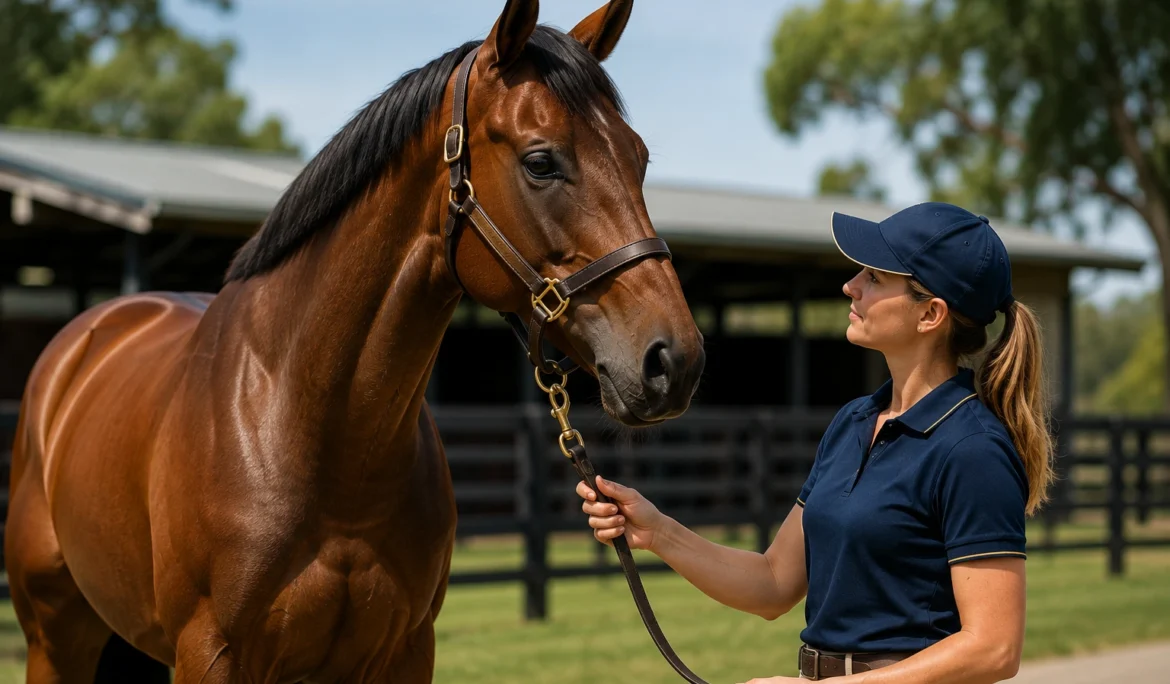
If getting to the track sooner is your main priority, a ready to run horse will usually offer the more direct route.
Yearlings are bought earlier in their development, before much of their formal education and race preparation has taken place. Ready to run two and three year olds are further along, giving buyers more information about their physical development, education and likely preparation timeline.
That does not make one option universally better. The right choice depends on how soon you want to see progress, how comfortable you are with uncertainty and what kind of ownership experience you want.
The main difference: development stage
The clearest difference between a yearling and a ready to run horse is where each sits in the development cycle.
When you buy a yearling, much of the journey still lies ahead. The horse will need time to mature, begin or continue its education and progress through training before racing becomes a realistic prospect.
A ready to run horse has already moved further through that process. The term does not guarantee that the horse will race immediately or perform successfully, but it usually means there is less distance between purchase and meaningful training progress.
For buyers focused on speed to action, that distinction matters.
Why ready to run horses may reach the track sooner
More of the horse’s development is visible
Buying later in the development cycle gives you more information to assess.
Depending on the horse, you may be able to form a clearer view of:
- physical development and condition;
- education and handling;
- temperament;
- movement;
- response to training;
- likely preparation requirements.
A yearling may still have strong potential, but more of its physical and behavioural development remains unknown.
A ready to run horse does not remove uncertainty. Racehorse ownership always involves variables. However, assessing a horse at a later stage may help reduce some of the guesswork.
A shorter preparation window may be possible
A ready to run horse may already have completed groundwork or early training that a yearling has yet to begin.
This can suit buyers who want to:
- enter training sooner;
- follow a clearer preparation plan;
- make decisions using more current information;
- avoid waiting through the earliest stages of development.
Australian research provides useful context for buyers concerned about an earlier racing timeline. A University of Sydney study examined the careers of more than 115,000 Australian Thoroughbreds over 10 years and found no evidence that starting to race as a two-year-old shortened a horse’s career. Horses that began racing at younger ages were more likely to have longer careers than those that started later.
The finding does not mean every ready to run horse should race early. The actual timeline will still depend on the individual horse, its condition, development, the trainer’s assessment and any veterinary considerations.
The buying decision may feel more concrete
Some buyers prefer to assess a horse closer to the point of racing preparation. They value seeing what the horse is like now rather than buying mainly on pedigree and projected potential.
This can be particularly helpful for buyers who want a shorter route to participation or who are less comfortable making decisions at an earlier, more speculative stage.
Why buyers choose yearlings
The opportunity to buy earlier
Yearlings appeal to buyers who want to enter the ownership journey near the beginning.
Buying at this stage allows owners to follow more of the horse’s development and may provide access to prospects before their later potential becomes clearer.
For some buyers, that longer journey is part of the appeal. They enjoy watching the horse mature, progress through education and eventually move towards race preparation.
More development potential, but more uncertainty
A yearling has more time to change physically and mentally. That can create opportunity, but it also introduces more variables.
These may include:
- physical maturity;
- soundness;
- temperament;
- response to training;
- suitability for racing;
- the time needed before the horse is ready to progress.
Buying a yearling therefore requires patience and realistic expectations. A strong pedigree or attractive physical profile cannot guarantee how the horse will develop.
A longer ownership horizon
Yearlings often suit buyers who do not need immediate progress to feel confident in their decision.
They may be a better fit when the buyer:
- is comfortable waiting;
- wants to follow the full development journey;
- accepts a higher level of uncertainty;
- has a longer term ownership plan;
- is working with an experienced trainer or adviser.
A yearling is not the wrong choice. It is simply less suited to buyers whose main objective is reaching the track as soon as reasonably possible.
Ready to run horses vs yearlings: key differences
Time to racing
Ready to run horses are generally further along in their education and preparation, so the potential route to racing may be shorter.
Yearlings begin earlier in the cycle and usually need more time before race preparation becomes realistic.
Neither timeline is guaranteed. Individual development, training decisions and veterinary factors will influence progress.
Development uncertainty
Yearlings carry more uncertainty because more of their development remains ahead.
Ready to run horses allow buyers to assess the horse at a later stage, when more information may be available. This does not mean they are low risk purchases, but some important unknowns may be easier to evaluate.
Purchase price and ongoing costs
The purchase price alone does not determine value.
A yearling may appear attractive because the buyer is entering earlier, but the longer development period can involve additional training, care and ownership costs before racing.
A ready to run horse may command a different price because more education or preparation has already taken place.
Buyers should consider the total cost of ownership, including:
- training fees;
- veterinary care;
- transport;
- insurance;
- spelling or agistment;
- racing and registration costs;
- unexpected delays.
The better value option is the one that fits your budget, expectations and preferred timeline.
Buyer experience and expectations
Ready to run horses may suit buyers who want:
- a shorter path towards race preparation;
- more current information;
- a clearer sense of the horse’s stage;
- less time spent waiting through early development.
Yearlings may suit buyers who want:
- to buy earlier;
- to follow a longer development journey;
- the possibility of identifying potential before it is fully visible;
- greater involvement from an early stage.
First time buyers can consider either option, but professional guidance is particularly valuable when assessing development, suitability and likely costs.
What to check before buying
Whether you are considering a yearling or a ready to run horse, assess the individual horse rather than relying on its category alone.
Important questions include:
What education has the horse completed?
Ask what handling, breaking in, training and preparation the horse has received. Clarify what “ready to run” means for that particular listing.
What is the expected training timeline?
Discuss the horse’s current stage with the seller and proposed trainer. Ask what work remains before it could enter a formal racing preparation.
Has the horse had a veterinary examination?
A pre purchase veterinary examination may help identify health or soundness concerns. The scope of the examination should reflect the horse, purchase price and intended use.
What are the ongoing costs?
Look beyond the sale price. Understand the likely training, care, transport, insurance and racing related expenses before committing.
Does the horse fit your objective?
A promising horse can still be the wrong purchase when its timeline, development stage or likely costs do not match your plans.
Start with your objective, then assess the horse against it.
How to compare ready to run horses and yearlings
Compare horses at the same development stage wherever possible.
A yearling and a ready to run horse may both have racing potential, but they represent different buying propositions. Review their age, education, pedigree, physical development, location, price and expected preparation timeline in context.
Before enquiring, decide what matters most:
- How soon do you want to see progress?
- How much uncertainty are you comfortable accepting?
- Do you want to follow a longer development journey?
- What is your total ownership budget?
- How much professional support will you have?
- Are you buying for early involvement or faster participation?
Clear priorities will help you narrow the field more effectively than choosing on age, price or pedigree alone.
Frequently asked questions
Are ready to run horses more likely to reach the track sooner?
Usually, yes. They are generally further along in their education and physical development than yearlings. The actual timeline still depends on the individual horse, its trainer and its health.
Is buying a yearling riskier?
A yearling normally involves more development uncertainty because more of the horse’s progress remains ahead. That does not make it a poor purchase, but it requires patience and realistic expectations.
Which option is better for a first time buyer?
There is no universal answer. Buyers who want a shorter, more visible path may prefer a ready to run horse. Those who have experienced support and are comfortable with a longer journey may consider a yearling.
Are ready to run horses always more expensive?
No. Price depends on factors such as pedigree, physical development, education, perceived ability, demand and seller expectations. Buyers should compare total ownership costs as well as the purchase price.
What should I ask before making an enquiry?
Ask about the horse’s education, veterinary history, current condition, expected training timeline, temperament, ownership costs and any available documentation.
Which option is right for you?
Choose a ready to run horse when your priority is a shorter path towards training and racing, with more information available at the point of purchase.
Choose a yearling when you are comfortable buying earlier, waiting longer and accepting more uncertainty in return for following a greater part of the horse’s development.
The best option is not the one that sounds most exciting. It is the one that fits your timeline, budget, risk tolerance and reason for buying.
Browse horses that match your plans
Explore our horses for sale to compare available prospects by category, price, region and trainer.
You can also [view available yearlings] or contact our team for help identifying horses that suit your preferred timeline, budget and ownership goals.